Monday, April 2, 2012

Plants For The Flowering Garden


UNEXPECTED DELIGHTS
Autumn often brings unexpected guests. You might be able to watch a scarlet oriental poppy unfold itself from its green pod, shaking out its silk petals as you might a shirt that has been packed too long in a suitcase. This is a flower of early summer, but given the right conditions it sometimes puts on a wild late performance, too. It is only one of the perennials that finds the mild, damp weather that sometimes comes in late autumn a rather better growing proposition than early summer, the appointment we had made for it in our own rather more rigid diaries. Delphiniums often throw up late flowering spikes, too, shorter than the summer ones, but strange and welcome interlopers in an autumn melange that may be predominantly painted in shades of orange, russet and brown. Or you may get spring flowers leaping early onto the canvas, primroses perhaps or double daisies (Bellis perennis).

The effect is of a shambolic army, the troops all marching to different tunes. Only a few stalwarts are proceeding at the pace we expect. Some divisions that should be bringing up the rear are overtaking the leaders. Some which we thought had shot their bolt have regrouped and charged in with new ammunition. It might be a general's nightmare, but for the gardener it can be glorious — provided you do not mind throwing away the rule book. Enjoy, is the message. The show may close any day no when winter arrives in earnest.

Mild conditions at this late season are a boon to all kinds of tender perennials such as salvias and the various types of osteospermum and argyranthmum. These opportunists will be joined by other flowers which can quite properly claim late autumn as their own season. Such is the old cottage garden chrysanthemum called 'Emperor of China', a reliably perennial chrysanthemum with soft, dirty pink flowers. The first petals are quilled, opening out to flat spoon shapes at the extremities. The centre part of the flower, still in bud, makes a dark contrast with the paler pink of the opened petals. As the flower ages, the quill effect disappears and you end up with a pale, fully double flower, spicily scented. A proper frost turns the leaves rich crimson, when it becomes even showier. Try it with brilliant blue Salvia patens and flowery umbels of nerine. When they have died down, it will almost be time to start looking for the first signs of winter aconites. The best gardens never have a metaphorical CLOSED sign on the gate.

Aconitum carmichaelii Arendsii' 'Golden Lhimes and Agapantlius
Depending on the season, these three plants will probably flower in succession, the day lily (Hemerocallis) first, followed by the agapanthus and finally the splendid, witchy monkshood (Aconitum). It has a faintly sinister air about it. Take note of that, for it is extremely poisonous. That's no reason not to grow it though. There are many other things to dig up and gnaw on in the garden before you need to attack your aconitum. The flowers are of the intense deep blue we associate with delphiniums, but they are easier to grow and not so prone to slug damage. They will be happiest in cool, moist, fertile soil with some shade, but they will grow happily in full sun, provided the soil is not starved and dry The agapanthus certainly is happier with sun on its back. Remember this when you are grouping the plants. Plants in pots, root-bound, sometimes seem to flower more freely than those in the open ground.

You can visit this flower guide for more information about this article.

Thursday, March 29, 2012

Most Inspiring Gardening Guide


Height 1.2m (411). Spread 1.2m (4fi). Flowering time Early si early summer. Star qualities Landmarl with superb, glaucous foh in whorls round the stem Evergreen. Big flower head intense greenish yellow. Other varieties Foliage types is bluer than other: varieties have particularlj flowers. 'John Tomlinson' almost spherical flower h 40cm (16in) long; 'Lam Gold' has cylindrical floi more golden in color with many stems springing from the base. The stems have a biennial habit. For their first year they make foliage_ In the spring of their second year, some produce great domes of sulphurous yellow-green flowers (some cultivars better than others).

Meanwhile new shoots are being produced from the base, so there is an ever-rolling supply of new growth and no off-season gap. Cold spring winds may burn the foliage so try to give this euphorbia a position out of the worst draughts. It will pnwitie a good screen for the lower half of the eremurus, whose flowering spikes will tower above it. The eremurus's leaves choose to die at a bad moment when the flowering spikes are at their best. If you plant your eremurus behind the spurge, you won't see its dying foliage. The double-flowered cranesbill (Geranium) will coincide with the last gasps of the spurge flowers and peak with the eremurus, whose stately spikes, covered in seed heads, can stand skeleton-like through early winter.

A" these plants like light_ free-draniag soil in full sun. The gladiolus does . .. not have as dominant a presence as the geranium and the sea lavender, which is why you should treat it 2$ die star of the group. Although in light soils, it spreads reasonably well by sited And srolon, it is much slower to bulk up in heavy soils. Start off with a itenernus dutch of corms, otherwise it will be visually overpowered by the wide-reaching arms of the geranium and sea lavender. The geranium is parbicuilady useful in early spring, when, if the winter has been mild, it is already spreading out its handsome leaves, each held on a single stiff stem. to make clinics 13on (-Ift) across. In this early part of the year, before the gladiolus scans to timer_ it makes an excellent foil for early tulips. Flowering in this group will be sequential: after the gladiolus will come huge heads of pink flowers on the geranium.. followed by a late summer eruption from the sea lavender Gladiolus communis subsp. Byzantinus Height in (3fo.
Spread 8cm (3in).

Flowering time Late spring to early summer. Star qualities Deep magenta flowers that, oddly, are not difficult to combine with other colors, especially pinks and blues. Sword-like foliage. Other varieties This wild gladiolus is a world away from the top-heavy gladioli of the show bench. Avoid them in mixed plantings. White- flowered The Bride' is beautiful, but not hardy.

You can visit this flower guide for more information about this article.

Perfect Planting Suggestions


FRIENDLY FACES
It is very much easier to love plants (and people) if they show some sign of loving s_.-OU in return. To get violas on your side, give them heavy, damp ground. You may find that they grow better in half shade than they do in sun. All the violas have five petals, two making rounded ears at the top, two making cheeks at the sides and one pouting into a chin at the bottom, but the way that the petals are put together gives each variety a completely different character. Some are moon-faced, the petals running together into a gentle rounded shape. Others have narrower petals that make long rather peaky faces, as with the superb `Ardross Gem'.

This viola spreads out a low mat of foliage before raising its flowers well above the leaves on wiry 18cm (7in) stems. This gives quite a different effect from the violas that like to have their leaves about them when they flower and pull their foliage up around their necks like shawls. Try `Ardross Gerd with a silver-leaved mossy saxifrage and a dwarf pink geranium, such as G. sanguineum var. striatum. It will grow well in a pot, though not quite as luxuriantly as it does in open ground. The mat of leaves spreads to cover the soil and stops it drying out and the flowers bob about in the space completely different flowering season. They can, for instance, usefully disguise the collapsing foliage of colchicums, which are looking at their worst by late spring. But the colchicums' time will come just when you shear back the violas for

The fact that 1,1311 can never quite describe the exact color of any particular violais an advantage. Their smudgy colors, like chameleons' skins, adapt to whatever company they find themselves in.

If slugs ate bindweed, it would be much easier to believe that we are indeed part of some Grand Design. change their character completely when combined with the warmer shades of verbenas. Maggie Mott lived at a house called Scotswood in Sunningdale. Berkshire, where her family had a gardener who was a viola fancier. He named a seedling after his employer's daughter and showed it successfully at the Royal Horticultural Society It appeared in the Society's viola trials in 1904 and has been in cultivation ever since.

It flourished in India in the 1930s when the garden designer John Codrington used it in the gardens of the Residency in Delhi. The Commander in Chief, Sir Phillip Chet wode, had grandiose ideas for a large circular pool at the end of a vista there. The pool proved too expensive a project so Codrington planted a huge circle of 'Maggie Mott' instead, the silvery color giving the illusion from the Residency windows that there really was water at the end of the view.

Wednesday, March 28, 2012

Analyzing Your Space In Garden


Plant care
Apply a bulky organic mulch to a depth of 7.5cm (3in) in mid spring, to help young trees establish, and keep these trees well watered during dry spells. Mature trees don't require extra irrigation.

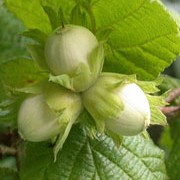
Apart from regular pruning to encourage new, nut- bearing wood, cobnuts and filberts can be left to their own devices. Yields will be increased, however, if a top-dressing of general-purpose fertilizer is applied in early spring,
Nuts will develop on established plants along the length of one-year-old wood and on fruiting spurs. To encourage the production of new, more floriferous growth on established trees, remove older, thicker stems; these can be used for hurdles or plant supports. Do this in late winter when the trees are flowering, because in the process their pollen is likely to be dislodged from the male flowers and transferred to the females on the remaining stems.

In late summer, break some of the new shoots in half and leave hanging on the tree; this encourages flower buds to form in autumn. In winter, shorten these "brutted" stems to 10-12cm (4-5in).

At harvest time


Harvest cobnuts and filberts just as the nuts and husks begin to turn yellow in late summer. If left on the tree after that they will often be stolen by squirrels, yet if picked too early the unripe nuts will shrivel in storage. Once harvested, lay the nuts out on a rack in a sunny, dry spot for two weeks until the husks turn brown and papery. At this point pick over the nuts and discard any showing signs of nut weevil attack , or any other evidence of damage. Place the remaining nuts on slatted trays or in net bags and store them in a cool, dry, rodent- free building until needed.

Pests and diseases

Cobnuts and filberts are generally free of major diseases but three pests can cause serious problems.

Nut weevil The grubs feed inside cobnuts and filberts. Round exit holes may be seen in the shells. There is no pesticide available.
Hazel big bud mite Widespread, but rarely has a damaging impact on the plant so it can be tolerated.

Squirrels are very agile mammals and so are difficult to control. The best advice is to pick the nuts as soon as they are ready.
You can visit this flower guide for more information about this article.

Tuesday, March 27, 2012

Growing Strawberries And Raspberries


Buying and planting

Buy only plants that are certified free of viruses because raspberry plants are very prone to such infections, which are spread especially by aphids. Dig up rooted canes for replanting only if you know the plants are healthy and crop heavily.
Summer raspberries require a sturdy support system: run two wires — one 60cm (2ft) high and the other 1.5m (5ft) high — along the length of the row. Autumn raspberries don't need support.

Clear the site of perennial weeds before planting as these are difficult to control once raspberries are established. Plant bundles of bare-root canes in late autumn, spacing the new raspberry plants at least 30cm (12in) apart. Then add a mulch of bulky organic matter, 7.5cm (3in) thick. Avoid mushroom compost (which is too alkaline) or overly rich farmyard manure (which tends to burn off the new shoots as they push through the mulch layer).Once newly planted canes start to burst into leaf in spring cut them down to 10-15cm (4-6in) in height to encourage more canes to be produced. Tie summer varieties to the support wires ain late summer.
Autumn raspberry canes will bear fruit in their first year, summer raspberries in their second.

Plant care
In early summer, pull up suckers between the rows of summer raspberries, and thin autumn raspberries to 10cm (4in) apart. Cut out fruited summer canes once they've finished cropping and tie in new ones, thinning them to 10cm (4in) apart. Cut autumn raspberry canes down to the ground in midwinter.

In mid spring, top-dress both summer and autumn raspberries with a general-purpose fertilizer, then a mulch of low-nutrient organic matter such as garden compost or composted bark chips. Alternatively, top- dress with well-rotted farmyard manure.

At harvest time
The first summer raspberries are ready for harvesting in early summer, whereas autumn raspberries won't mature until late summer. Pick on a dry day. Eat them fresh, freeze them, or make into preserves.
You can visit this flower guide for more information about this article.
Monday, March 26, 2012

Gardening With Soft Fruits


Cherries

One of the earliest tree fruits to ripen in the fruit garden are cherries, and their flavor is delicious, as the birds will try and testify! Once the privilege of larger gardens, the availability of dwarfing cherry rootstocks and self-fertile varieties now mean that any garden, big or small, can accommodate a productive tree.

The best sites and soils

A fruiting cherry tree is a real jewel in the fruit garden. Not only does it provide delicious fruits but an established tree also bears beautiful spring blossom and provides great autumn color, making it ornamental as well as fruitful.

Sweet cherries (Prunus avium) are most productive in a site in full sun, whereas acid cherries (P cerasus) such as 'Morello' are happy to be positioned against a shady wall, making them a very useful crop in north- or east-facing gardens. Because they flower very early in the year, however, all cherries are best planted in a sheltered position so that pollinating insects (mainly bees) are encouraged to access the flowers. While cherries are tolerant of both acid and alkaline soils they do need good drainage. Cherry tree roots are naturally very shallow, and so any water logging will cause them to rot or to succumb to water-borne root diseases such as phytophthora .

Plant care

Protect cherry flowers, which are susceptible to frost damage, from late frosts. If possible, cover freestanding trees with double-thickness horticultural fleece on frosty nights. Hold the fleece away from the flowers with bamboo canes or similar. Drape a similar insulating material over fan-trained cherries. The cover can be left in place during the day as long as access is left for pollinating insects. As well as providing frost protection, ensure trees are kept well watered during the early stages of fruit development, to avoid excessive "run-off", when some fruits turn yellow and fall off. Run-off occurs in three main stages: when unpollinated flowers and blooms with immature embryos are shed; when pollination is incomplete; and when fruits swell but are then aborted because they have suffered a growth check through lack of moisture, inadequate food reserves, or excessively cool temperatures.

Neither sweet nor acid cherries require fruit thinning_ Before fruits start to show some color, erect netting to deter birds. Ripe fruits are prone to skin splitting during wet weather so try to keep fruits dry and pick over trees regularly. Cherry growth is quite vigorous and so they benefit from an annual top-dressing of a general-purpose fertilizer in mid spring, and, if fruiting is poor, a top- dressing of a slow-release high potash fertilizer such as sulphate of potash in late winter.
You can visit this flower guide for more information about this article.

Growing Cherries, Citrus Fruit And Figs


Buying and planting

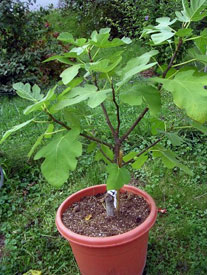
Plants are bought from garden centres in containers and are usually either single- or multistemmed. As figs can become large, vigorous plants they can be used to cover large walls, even the sides of houses.

However, most people should choose one that will eventually reach about 2m (61/2ft) high and 3-3.5m (10-11ft) wide — the equivalent of two fence panels. Plant it 20cm (8in) away from the wall, in spring. Spring is also the best time for potting up a fig plant. Start the plant off in a 25cm (10in) container, and as the plant grows pot it up each year, with it eventually ending up in a 45cm (18in) pot. Use a container with plenty of drainage holes and lots of broken crocks at the bottom. Standing the container on bricks helps excess water drain away. If you are wanting to plunge a containerized fig into open ground, fill a 30-40cm (12-16in) pot with John Innes No 3 soil mix and the young fig plant. Then position the pot well into the ground.

Plant care

In spring, apply a general-purpose granular feed. Then mulch around the base of the tree with well- rotted manure, to help to retain moisture and suppress weeds. Give figs plenty of water — probably each day during summer. Also during the growing season apply a tomato fertiliser every two weeks until the figs start to ripen. One of the advantages of figs is that you don't have to worry about pollination; the fruit are seedless and so develop without the need for fertilization. Except for the very warmest of sites, protect fig plants during the colder months. In autumn, move plants that have been grown in pots into an unheated greenhouse, and return them back outside in late spring. Pack a fan-trained plant with straw, bracken, or even bubble wrap and then cover with horticultural fleece . Remove such insulation gradually during late spring. Dig around the outside of a planting pit every couple of years with a sharp spade to ensure that no roots have escaped.

Repot figs every couple of years even when they have reached their established size. Remove them from their pot, gently prise out their roots from the root ball. Then replant into fresh John lnnes No 3 soil- based potting compost.

You can visit this flower guide for more information about this article.